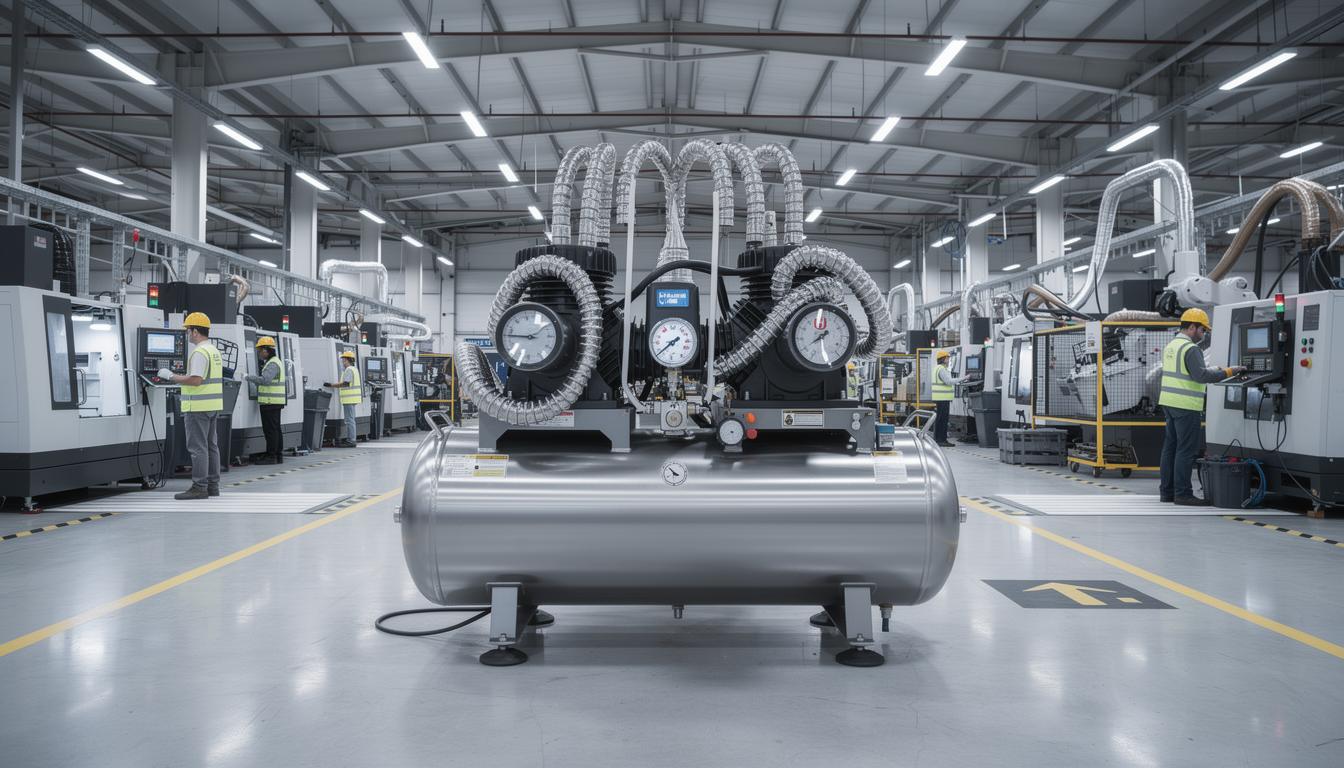
Compressed air moves the gears of the global factory, reshaping production flows. The question posed, why so vital? Every product owes a debt to this hidden force. Some rely on robotic prowess, others on digital brains, yet compressed air remains in the shadows, always present. Most overlook its meaning, yet subtract it and manufacturing crumbles instantly.
The essential role of industrial air compressors in the plant
Steel clatters from presses, short barks of air, all orchestrated from a single air heart. Few acknowledge this energy surging quietly; it strikes with the force of tradition and the whimsy of invention. Switch perspectives, and innovation surfaces—machines recall their ancestors, from hefty manual pumps to the subtle pulse of modern compressors. Gone the thunder, vanished the crude, in 2026 machines respond to operators from afar, trim their appetite, speak through diagnostics labeling leaks before a hand lifts a wrench. Progress stirs, pushes aside the analog, and sets the rhythm. Experts across sectors turn to Industrial Air Compressors for reliable systems meeting evolving industrial demands.
A lire également : Superior canal dehiscence therapy: modern solutions to balance and hearing challenges
Quiet replaces the jarring, and intelligence mingles with steel in every corner of the plant.
The historical evolution of industrial air compressors
History rewinds, refuses to quit; yet machines, unlike the nostalgic worker, evolve. Facts remain, old black-and-white faces beside grinding compressors haunt the company’s archive. In those days, output relied on muscle and repetition. Leap to 2026, presence feels lighter, yet the reach greater—Atlas Copco and Ingersoll Rand perfect the art of invisibility, whisper-quiet flow, instant adaptation, fewer stops, energy numbers drop off the reports, reliability stretches.
A découvrir également : How to find an executive coach for leadership development and career growth
The modern manufacturing settings entirely dependent on air compressors?
The world smells of metal, plastics, biting solvents. Who senses it first? Not only robotics, not only skilled hands. In the food sector, compressed air brings flavor—think soda fizz, flawless snack packs. Pharmaceutical lines breathe cleanliness, without pure filtered air, medications halt. Microchips never know a speck of dust; only the filtered pulse of compressed streams clears the way. Automotive plants burst alive, paint dances onto bodies, bolts snap into place, rarely pausing, always delivering. Not the spectacle, but the hum of assurance. Production’s tempo, the silent beat, drawn by air.
The main benefits of industrial air compressors for factories
Repeated actions build empires, but technology reinvents rhythm. What gains emerge, and how do they echo in the balance sheet?
Focus first on performance, then glance at satisfaction; the path to profit wears both faces.
The efficiency gains now reached by compressed air?
| Process | Traditional Method | With Compressor | 2026 Data, Source |
|---|---|---|---|
| Assembly Line | Manual labor | 30% higher throughput | US Department of Energy |
| Paint Spraying | Electric sprayer | 40% less overspray | European Coatings Association |
| Bottling, Packaging | Hydraulic actuators | 20% less downtime | Food Engineering Magazine, 2026 |
| Equipment Cleaning | Manual brush | 50% faster cleaning cycle | Factory Maintenance Reports |
Every gesture counts, thousands repeat the same, but the compressor multiplies them, slicing waste, rare errors, even rarer stoppages. Pneumatic muscle removes fatigue, and the finance office quietly celebrates routines made smooth. Sensors monitor the invisible leaks, trim excess consumption, play offense, not just defense. Operators relax, reassured by the rhythm, safer in the hush. Every measure echoes down the shift.
The versatility of compressed air across production floors
Air morphs, never static—power a wrench, moments later flush a line. Production cries out for agility; air never falters. From guiding fragile materials on a belt, lifting rails, to purging dust with a sudden burst—one network, many lives. Cleaning operations, maintenance, gentle product handling, air cloaks itself in a new role. Plastic or steel, food-grade or fabrication line, all within reach of a single infrastructure.
- Paint cabins breathe controlled, filtered air
- Cleanrooms shelter from the tiniest contamination
- Heavy industry moves or cuts steel by air
- Precision robots grip and assemble, powered by compressors
The reliability and safety differences with compressed air?
Comparisons sometimes mislead, yet reality persists. Pneumatic networks calm nerves where sparks pose risk—wet surfaces, chemical vapors, nuisance. Outages lurk less often, maintenance teams sigh in relief, time between repairs stretches, peace reigns. In breweries, refineries, or any place drama threatens, compressed air wins trust. Steady, silent, unfailingly loyal, every stop avoided translates to income protected. In calm or crisis.
The leading compressor technologies, applications, and stories
Technology skips, then gallops, then pauses awaiting the next leap. Professionals sift through choice, rarely swayed by flash or legacy.
The most common industrial compressor variations?
| Type | Best-Use Scenario | Performance, 2026 Data | Preferred Brand |
|---|---|---|---|
| Rotary Screw | High demand, round-the-clock flows | Continuous, 99.5% uptime | Atlas Copco |
| Reciprocating | Intermittent, smaller volumes | Robust, 88% efficiency at reduced cycles | Quincy Compressor |
| Centrifugal | Very large steady operations | Massive air movement, minimal vibration | Gardner Denver |
Steady operations favor rotary screw types; reciprocating units stand guard for sporadic jobs, or backup emergencies. Some veteran engineers swear by the old reciprocating machines, a few recall the day they ran all night, saving a shift from disaster. Centrifugal machinery feeds whole networks from a hidden room. No one formula wins the day—choose, adapt, scale up or down, but never compromise simplicity for complexity. Advice trades hands over coffee breaks, wisdom lives under dust covers and nameplates.
The selection process for the right air compressor
Brands compete, yet the purchase rarely comes down to logos. Airflow rates top the checklist, but budgets tug against ambition. Engineers project tomorrow’s demands, balance today’s urgency; costs ripple far beyond the showroom visit. Maintenance weighs heavier than promotional promises; a spare part out of reach can turn pride into regret. Trust wins the contract—support, availability, track record—all tip the scale.
One time, silence took over a Texas electronics plant at dawn, and the managers froze, staring at control screens as routines unraveled. Sarah, maintenance lead, called out, ‘Pressure dropped, and I missed the alert days ago,’ regret shadowed her words. The team regrouped—quick fix, anxious stares, air whooshed back; a sigh swept through the shift. Sarah, hands shaking, wrote daily checks into her team’s rituals. Grateful faces, relief thick as the factory air, the lesson written across every whiteboard since.
The impact of maintenance and progress on compressor prowess
Factory leaders know trouble likes surprise, so they rely on tight checklists, daily notes, pressure logs, filter exchanges. Hands trace valves, diagnostics buzz reminders to screens before disaster ever sniffs opportunity. Prevention shifts anxiety to control, everything hums longer, plants sweated less in 2026 than in years past. Annual breakdowns shrink; everyone knows, a clean compressor performs better, every operator trusts their clipboard now more than any guess.
Remote monitoring tools let managers sleep; repairs plan themselves, the pace relaxes, and the air feels fresher.
The latest breakthroughs shaking up industrial compressed air science
Change in 2026, data pulses through every component. IoT sensors chat across the plant, reading pressures, tweaking flows, demanding attention. Variable speed drives kill excess, cut emissions straight off the grid records, everything whispers sustainability. Operators huddle round digital dashboards, full-factory status waits for command. Machines spill savings into budgets, compliance becomes a badge, not a battle. Standards climb, expectations chase them, surprise becomes routine. Efficiency becomes the new sport, monitored end to end, breakthroughs roll on weekly, not annually.
The economic and ecological impacts of air compression in modern manufacturing
Money steers decisions—compressed air technologies show gratitude, cutting bills, shrinking headaches. Outages fade, lost hours slip from memory, fewer breakdowns, more finished product. Shareholders smile, regulators nod, reputations sharpen. Every saved watt, every minute not wasted, drops to the bottom line, satisfaction tallies up across paychecks and reports. Stories trace from Ohio to China—every plant learns the same lesson, lean operation builds trust, returns value.
Downtime costs vanish, production rises, maintenance becomes nothing but a line item on a happy spreadsheet.
The manufacturing world chasing sustainability?
Look beyond quarterly reports, oversight sharpens, standards stiffen, society expects more. Environmental pledges shift from slogans to audited actions by 2026. Oil-free solutions edge past greasy relics, refrigerant choices answer policy, not whim. Sustainability awards become another goalpost. Compressed air sheds waste, energy use plummets, everyone breathes easier—regulators cheer, executives sleep soundly, even the planet shrugs off some exhaustion. Longevity matters, reputations reinforce themselves, compliance moves from cost to competitive edge.
Tours once meandered, now groups gather, screens light up, compressors stand at the center—pride replaces indifference. Screens flicker numbers, engineers trade glances, discussing tomorrow’s upgrades, how air, silent and steady, drives the new normal. Everyone has a question, always, about the invisible power shaping factory floors in 2026, never content, always innovating. Every innovation belongs, every sound, every cool rush, every savings, all add up—manufacturing pulses on, never static.